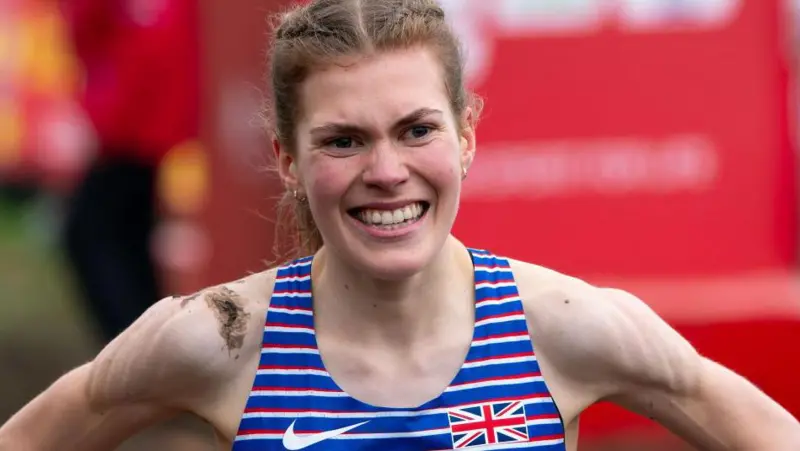
Cross country running used to be a genuine battleground for the world’s best distance runners. Milers, marathon champions, and 10,000m specialists all lined up together on the same muddy circuits. The result was some of the most compelling distance racing on earth. Something has changed. Britain’s Megan Keith ran brilliantly at the 2026 World Cross Country Championships in Florida, but the event around her told a different story.
Cross Country Running’s Complicated Place in the Modern Calendar
Keith, 23, is one of British athletics’ most exciting young talents. She’s a European age-group title holder, an Olympian, and a European Athletics Championships bronze medallist over 10,000m. But her heart, she’s admitted, is on the hills.
Speaking to BBC Sport ahead of the championships, the Inverness Harrier was candid. She described cross country as where her passion still lies. Sponsors and British Athletics, though, focus their investment on the track. So Keith has adapted, treating cross country running as a complement to her summer work rather than the main focus.
That shift has served her well. A European bronze in Rome in 2024 was followed by Olympic and World Championship appearances, earning her British Athletics funding for the first time. Still, she made time for the mud. Silver at the 2025 European Cross Country Championships in Portugal showed she remains among the best in Europe on the terrain she loves.
What Happened at the Tallahassee World Championships
On 10 January, the World Cross Country Championships were held at Apalachee Regional Park in Florida. It was the first US staging since Boston in 1992. The course was inventive: log hurdles carved into alligator shapes, a sand pit, a water crossing, and a mud stretch inspired by the Florida Everglades. Creative design, though, couldn’t mask the problems with the entry list.
Just 52 nations sent athletes. Italy, Germany, Portugal, Denmark, Finland, Hungary, and Switzerland were all absent. Belgium sent only one runner despite a deep cross country running culture. Ethiopia’s youth teams were badly hit after 14 athletes were denied US visas, disrupting the senior and relay squads too. Several of those missing nations had stood on the podium at the European Cross Country Championships barely a month earlier.
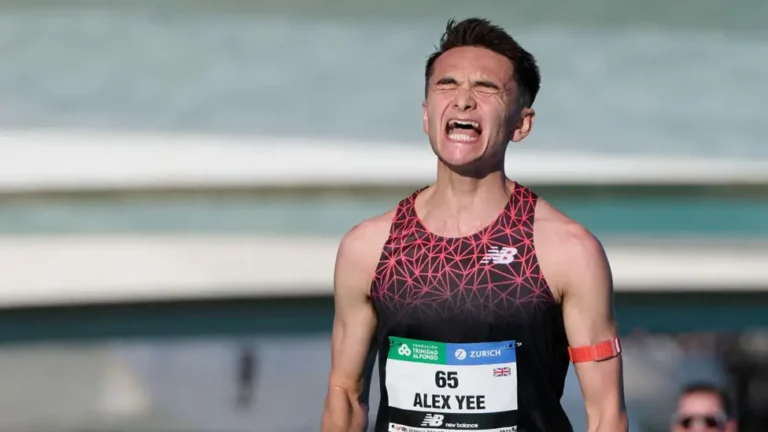
Many elite distance runners chose the Valencia 10K in Spain on the same weekend. Sweden’s Andreas Almgren and Scotland’s Eilish McColgan both broke European records there. That choice says a great deal about where priorities now sit.
Keith led the British women’s quartet. She held around 14th for most of the race, but the Florida heat bit hard on the final lap. She slipped back to finish 25th, the top British woman home. Uganda’s Agnes Ngetich took the women’s title. Ethiopia claimed both team golds. Britain finished ninth overall, with the junior men fifth.
Why Cross Country Running Has Lost Ground
This decline didn’t happen overnight. Cross country running had an annual World Championships from 1973 right through to 2010. In 2011, World Athletics cut it to biennial. Peak participation topped 800 athletes. By Tallahassee, it had fallen to around 485.
The reasons run deeper than scheduling. Lucrative road races and track contracts have changed the maths for elite runners. A marathon agent cares far more about an April performance at a World Marathon Major than a January placing in a field. As Keith’s own comments confirm, British Athletics’ funding model reinforces that hierarchy.
Genuine quality still exists at the front when good fields arrive. Uganda’s Jacob Kiplimo chased a historic third consecutive world cross country title in Tallahassee. Real depth showed in both senior races. But when Italy and Germany don’t show up, it’s hard to argue this is truly a world championship in full.
What the Future Holds for the Sport
A quick fix doesn’t exist. World Athletics can adjust dates and formats. It can’t make the world’s best runners skip paid road races for unpaid mud, though. Cutting the event to biennial was meant to raise its profile. Instead, it’s arguably made it easier for nations to sit one out without much consequence.
At club level, cross country running in Britain remains healthy. England Athletics and the domestic Cross Challenge series keep attracting strong fields. The sport still produces athletes who turn their off-road base into track careers, as Keith proves. Run annually, the European Cross Country Championships tends to draw stronger European fields than the world event. For British athletes, it may become the more meaningful competition.
No athlete makes a stronger case for the sport’s value than Keith herself. She goes into the summer of 2026 as a genuine medal contender at the European Athletics Championships in Birmingham. Her cross country background didn’t hold her back. It built her. Endurance, racing sense, toughness on a hard course: these are exactly the qualities that make great track runners.
Cross Country Still Matters. It Just Needs a Reset
A rethink is overdue. Firmer expectations of member nations, better prize money, a sharper calendar: something needs to change. Right now, the event is drifting.
For now, the athletes who do turn up deserve real credit. Megan Keith ran a lap of a Florida obstacle course in serious heat, giving everything for a top-20 finish at a world championship. That matters. Cross country running made her the athlete she is, and for young British runners coming through right now, it’s still doing the same thing. Keep following the athletics season here as Britain’s distance runners carry that cross country fitness onto the track this summer.